Writing a lab report might seem intimidating at first, but once you break it down, it’s a manageable and even rewarding task. Lab reports are your chance to communicate the process and outcomes of your experiment while showcasing your understanding of scientific methods. They’re not just about documenting what happened; they’re about demonstrating your ability to analyze data, make conclusions, and reflect on your findings. Whether you’re in chemistry, biology, physics, or another science field, writing a well-organized lab report is an essential skill.
This guide is designed to help you approach the lab report with confidence. From structuring your report to analyzing your results and presenting your conclusions clearly, we’ll walk you through each step of the process. By the end of this guide, you’ll be equipped with everything you need to write an effective, engaging, and well-organized lab report.

What is a Lab Report?
At its core, a lab report is a comprehensive account of your experiment and its results. It serves as a detailed document where you outline the purpose, methods, results, and interpretations of your experiment. A lab report isn’t just about presenting raw data; it’s about interpreting that data, explaining how you arrived at your findings, and discussing their significance.
Think of a lab report as telling the “story” of your experiment. From start to finish, it guides your reader through every step you took, including the decisions you made and the reasoning behind them. Here’s a breakdown of the key components of a lab report:
- Purpose and Objective: Your lab report should clearly explain the purpose of your experiment. Why did you conduct this experiment? What were you hoping to discover or prove? Establishing the objective right from the start sets the stage for the rest of the report and provides a framework for interpreting your results.
- Experimental Procedure: The methods section provides a step-by-step description of the procedures you followed to perform your experiment. This is critical for others who may want to replicate your experiment to achieve similar results. Be as detailed as possible, listing the materials you used and the exact steps followed.
- Data and Results: This section presents the raw data you collected during the experiment. It may include measurements, observations, tables, and figures. However, presenting the data is just one part of this section—the real goal is to show how your data supports or refutes your hypothesis.
- Analysis and Discussion: The discussion is where you analyze your results. Did the experiment go as planned? Were there any discrepancies between your results and your expectations? This is also where you will explain the significance of your findings, compare them to existing research or theories, and identify any errors or limitations that may have impacted your results.
- Conclusion: In the conclusion, you’ll summarize your findings and discuss the implications of your experiment. Was your hypothesis supported? What might future research explore based on your findings?
The purpose of writing a lab report is to communicate all these elements in a clear, organized way. It’s not just about recording what happened; it’s about demonstrating your ability to think critically about the experiment and its outcomes, and communicating that to others effectively.
Why Are Lab Reports Important?
In addition to documenting and communicating your findings, lab reports offer a unique opportunity to develop critical academic and professional skills:
- Analytical Thinking: Writing a lab report requires you to interpret data, assess the validity of your results, and analyze the methods used. This process strengthens your analytical thinking and helps you develop problem-solving skills.
- Attention to Detail: Lab reports require you to record precise details of your experiment. Learning to pay attention to these small details is not only important for writing reports but also for conducting experiments accurately and responsibly.
- Effective Communication: Lab reports help you practice presenting complex scientific information in a way that others can understand. This is a crucial skill, whether you’re presenting data to a class, publishing your research, or communicating your ideas in a professional setting.
- Scientific Integrity: Writing clear and transparent lab reports also encourages honesty in science. You’re required to disclose your methods and results openly, including any inconsistencies or errors that occurred. This promotes integrity in scientific work and helps maintain the credibility of your findings.
By following the steps in this guide and understanding the purpose behind each section of your lab report, you’ll not only produce a high-quality report but also enhance your skills as a critical thinker, communicator, and scientist. Keep in mind that your lab report is more than just an assignment—it’s an opportunity to demonstrate your scientific curiosity, creativity, and professionalism.
Are you ready to start writing? Let’s dive into the structure of a perfect lab report in the next section!
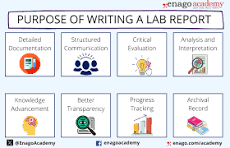 What is the Purpose of a Lab Report?
The primary goal of a lab report is to:
- Document the experiment and its results.
- Analyze data to either support or refute your hypothesis.
- Communicate your findings to others clearly.
- Reflect on the experiment, noting any limitations and suggesting areas for improvement.
Writing lab reports not only helps you organize your scientific thoughts but also teaches you valuable skills in analysis and communication.
Lab Report Format
To write a successful lab report, it’s essential to follow a clear and consistent structure. Here’s a breakdown of the key sections to include:
- Title: A concise description of the experiment.
- Abstract: A brief summary (150-250 words) covering the experiment’s purpose, methods, key results, and conclusion.
- Introduction: Introduce the background of the experiment, state your hypothesis, and explain the objective.
- Materials and Methods: List the materials used and describe the experimental procedure so others could replicate it.
- Results: Present your data using charts, graphs, or tables, and describe any trends or patterns.
- Discussion: Interpret your results, compare them to your hypothesis, and discuss any errors or unexpected outcomes.
- Conclusion: Summarize your findings and suggest future improvements or experiments.
- References: Cite any sources you used to help you design or analyze your experiment.
How Long Should a Lab Report Be?
Lab reports typically range from 1 to 5 pages, depending on the complexity of the experiment. Here’s what to keep in mind:
- Short reports (1-2 pages): These are focused on the essentials—introduction, method, results, and conclusion.
- Longer reports (4-5 pages): These require a more detailed analysis, including a thorough discussion and additional data interpretation.
The key is to keep it concise while including all the necessary information.
Lab Reports vs. Research Papers
It’s important to understand the distinction between a lab report and a research paper:
- A lab report focuses on documenting the experiment and its results.
- A research paper, on the other hand, involves a detailed investigation of a topic, often incorporating existing research, theories, and a broader scope.
In a lab report, you present data from a specific experiment, whereas in a research paper, you synthesize existing knowledge to contribute to a larger academic discussion.
How to Do a Lab Report: Outline
A well-organized outline can make writing your lab report a lot easier. Follow this structure to keep things on track:
- Title: A clear and concise title that describes the experiment.
- Abstract: Write it last, summarizing the experiment’s purpose, key methods, results, and conclusion.
- Introduction: Provide background information, explain the hypothesis, and set the stage for the experiment.
- Materials and Methods: Clearly detail what you used and the steps followed in the experiment.
- Results: Display data with charts or tables and explain any trends observed.
- Discussion: Analyze the results, compare them with your hypothesis, and note any sources of error.
- Conclusion: Sum up the findings, confirm whether the hypothesis was supported, and suggest future work.
- References: List all sources you consulted during the experiment.
Lab Report Examples
To clarify things, here are examples from different fields:
- How to Write a Formal Lab Report for Chemistry: These reports focus on chemical reactions, with equations and measurements taking center stage. Clear data analysis is key.
- How to Write a Lab Report for Biology: In biology, the focus is on living organisms and their behaviors. Your report might include observations, growth patterns, or changes in biological systems.
- How to Write a Science Lab Report: For general science reports, structure remains the same, but the content will vary depending on the subject—physics, environmental science, etc.
Tips on How to Write a Lab Report
Writing a lab report might seem tricky, but these tips will make it easier:
- Understand the objective: Know the purpose of your experiment before you start writing.
- Follow the structure: Stick to the standard format to ensure you don’t miss any important sections.
- Be clear and concise: Avoid jargon and long-winded explanations. Keep your language simple.
- Be detailed in materials and methods: Make sure someone else could repeat your experiment based on your description.
- Present data clearly: Use visuals like graphs and tables to make your data easier to understand.
- Interpret results: In the discussion, explain what your results mean in relation to your hypothesis.
- Be honest: If your results don’t match your hypothesis, that’s okay—discuss why it happened.
- Proofread: Check your report for errors before submitting.
- Write the abstract last: This will help you summarize the key points accurately.
- Cite your sources: Give credit to the materials or theories you used during the experiment.

Frequently Asked Questions (FAQ) about Writing a Lab Report
1. What is the purpose of a lab report?
A lab report documents and communicates the results of an experiment. It explains the methods used, analyzes the findings, and provides a clear interpretation of the data.
2. How long should a lab report be?
Lab reports generally range from 1 to 5 pages. Short reports focus on essential content, while longer ones include more detailed analysis and discussion.
3. What are the main sections of a lab report?
The main sections include:
- Title
- Abstract
- Introduction
- Materials and Methods
- Results
- Discussion
- Conclusion
- References
4. How do I write the introduction of a lab report?
Start by explaining the background of the experiment, followed by stating your hypothesis, and outlining the purpose and significance of the study.
5. Can I write a lab report if my results don’t match the hypothesis?
Yes! Be transparent about the outcomes, and analyze any discrepancies. Lab reports are about accuracy and analysis, not just confirming hypotheses.
6. How do I analyze the data in my lab report?
In the Discussion section, compare your findings with the expected outcomes, analyze patterns, and consider the impact of any errors or limitations in the experiment.
7. What is the difference between a lab report and a research paper?
A lab report focuses on documenting and analyzing an experiment, while a research paper explores a broader topic, often synthesizing existing knowledge and theories.
8. Should I use graphs and charts in my lab report?
Yes, visuals like graphs, tables, and charts help make your data more digestible. Be sure to label them clearly and refer to them in the report.
9. How do I write a conclusion for my lab report?
Summarize the key findings, confirm whether the hypothesis was supported, and suggest areas for future experimentation or improvement.
10. How important is the Abstract in a lab report?
The Abstract is very important—it provides a concise summary of the entire report. Keep it clear and to the point, highlighting the experiment’s purpose, methods, results, and conclusions.

Final Thoughts
Writing a lab report is a valuable skill that helps you communicate your scientific discoveries and build critical thinking. By following the steps and tips in this guide, you can confidently write clear and effective lab reports. Remember, the goal is to explain your experiment clearly and analyze the results thoughtfully.
Need more help with your lab reports? Don’t hesitate to ask for advice or additional examples!
Remember! It's just a sample. Our professional writers will write a unique paper for you.

Get this or a similar paper done in as fast as 4 hours, 24/7.
NB: We do not sell prewritten papers. All essays are written from scratch according to are specific needs and instructions